What the CLARITY Act Asks of Your Token Model
A bill that hasn’t passed is already rewriting token models: a 20% control threshold, affiliate disclosure, stablecoin yield and governance-only tokens. Four patterns that fail the CLARITY Act, what to rebuild before the September 15 Senate vote, and why it costs nothing if the bill dies.
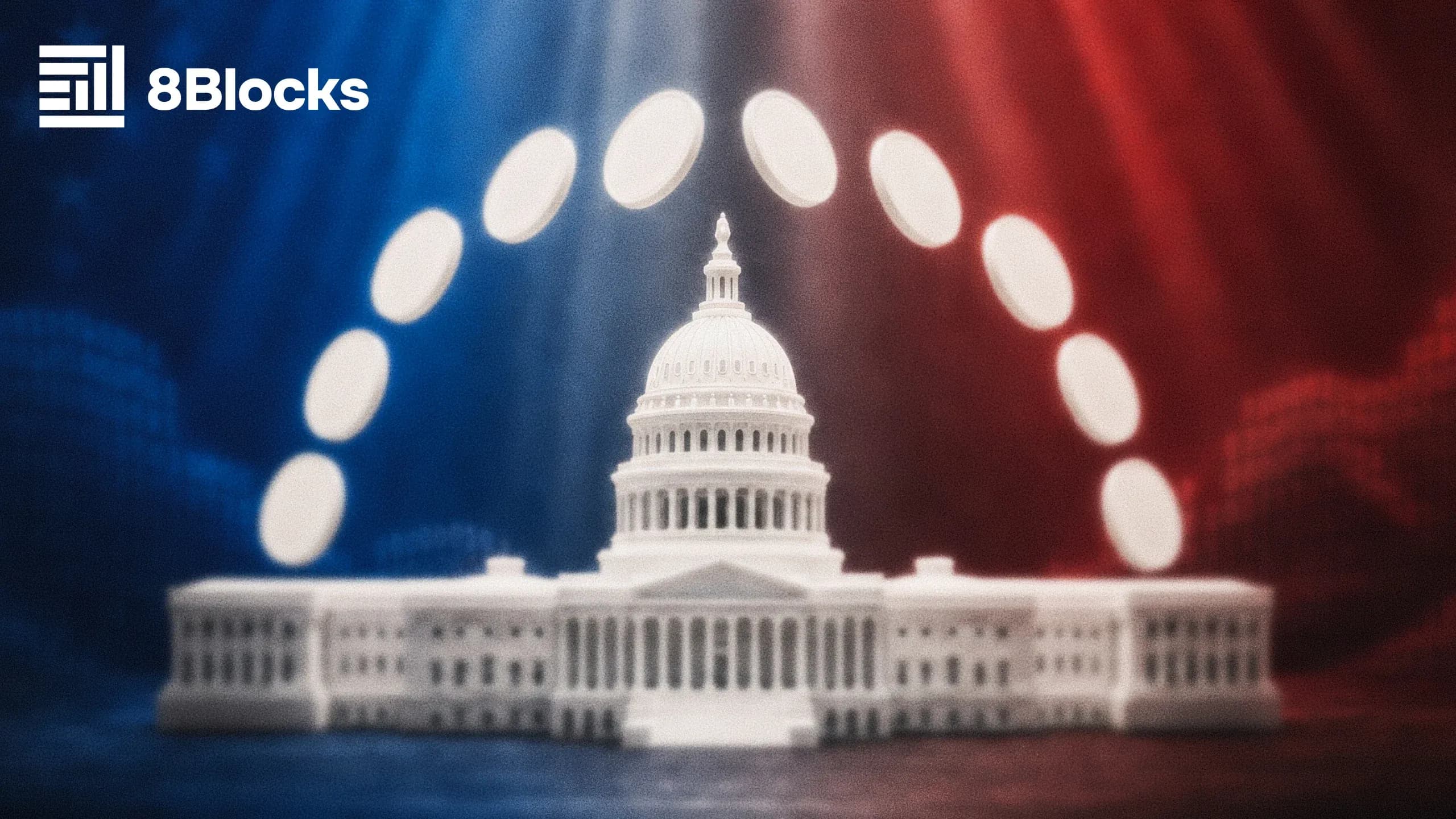
A bill that hasn't passed is already rewriting token models.
Most coverage of the CLARITY Act asks one question: will it clear the Senate. That's the wrong question if you're designing a token. The parts of the bill that touch your model describe things you cannot produce retroactively. Control that dilutes on a schedule. A supply history that survives publication. An affiliate table that doesn't need explaining away.
The vote decides when the requirement arrives. It doesn't decide what the requirement is.
For teams building out of the UAE the same three outputs already exist as a licensing question. A token issued under VARA in Dubai or under ADGM in Abu Dhabi files its supply schedule, affiliate holdings and control structure at approval, so the CLARITY disclosure list is less a new requirement than a second reader for a table you have already produced. What changes is the audience: a US venue will read that table without the context your licence application carried.
Where the bill stands, in four sentences
The House passed H.R. 3633 in July 2025, 294 to 134. The Senate Banking Committee advanced a compromise text in May 2026, 15 to 9. On September 15 the Senate votes on cloture on the motion to proceed, which starts debate rather than passing anything, and it needs 60 votes against 53 Republican seats. Galaxy Research cut its odds of the bill becoming law in 2026 from 50% to 30% in July, citing the calendar.
Three fights are still open: ethics provisions for officials with crypto holdings, illicit finance and how far the bill reaches into DeFi, and stablecoin yield.
That's the entire news cycle. The rest of this piece is about the text.
The threshold that changes your cap table
The bill splits jurisdiction. Digital commodities, meaning assets whose value derives from the use and functioning of the blockchain itself, go to the CFTC, which gets exclusive authority over spot markets. The SEC keeps primary fundraising and anything that works as an investment contract. Securities, derivatives, and stablecoins sit outside the digital commodity definition entirely.
The border between the two runs through a certification the bill calls the mature blockchain system test, built around a 20% control threshold.
Read that as a design parameter, not a legal category. A token model where the team, the treasury, and the funds hold controlling weight over the network with no schedule for that weight to fall doesn't fail the test on a technicality. It fails permanently. There's no version of that model that certifies as mature, which means there's no route out of investment contract treatment and no path onto a registered US venue.
Decentralization stopped being a narrative claim. It became a number with a date attached, and the date belongs in your unlock schedule.
The $75m exemption is a disclosure contract
The bill creates a registration exemption for token sales: US-organized issuers, up to $75m in aggregate sales over 12 months, no single purchaser taking more than 10% of total supply in one offering.
Founders read that as a shortcut. It isn't. It's a trade, and the price is disclosure.
To use it you publish the blockchain's maturity status, the token's source code, transaction history, a description of the launch and supply process, the consensus mechanism, the development plan, and affiliate ownership with the risks attached. Then you file semi-annual updates until the blockchain certifies as mature.
Listing works the same way. Exchanges can only offer digital commodities whose blockchains are certified mature, or whose issuers keep filing. Before listing anything new, the venue publishes source code, transaction history, and what the bill calls digital commodity economics.
Every one of those disclosures is an output of the model, not a document your counsel produces later. If the allocation table needs a paragraph of context before it looks reasonable, publication is when you find out.
Four model patterns that fail
| What's in the model | Where it breaks | What to change |
|---|---|---|
| Team and fund control over the network with no dilution schedule | 20% threshold, maturity test | Make the date control drops below the threshold an explicit model parameter |
| Large affiliate allocation that reads badly in public | Pre-listing and exemption disclosure | Rebuild allocations so publication doesn't cost you the narrative |
| Holder yield sourced from stablecoin reserve interest | Yield remains an open dispute, banks are pushing to close it | Build a second income leg that survives either outcome |
| Governance-only token with no link to network usage | Digital commodity requires value derived from the blockchain's use | Connect it to a flow, or accept security treatment deliberately |
The fourth one catches more projects than founders expect. A token that only votes has no claim to value derived from the use and functioning of the blockchain. That's not a drafting quirk to litigate later. It's the definition the whole framework runs on.
When this doesn't apply to you
Four cases where the advice above is noise.
You're not a US-organized issuer and you have no plan to become one. The exemption is closed to you by construction, and the maturity test only matters when you want a US venue.
Your token already trades and has a de facto classification. The bill changes the forward-looking framework and doesn't void pending matters, though a reclassification can shift the ground under an existing dispute.
You sold through a SAFT before 2025 under a structure that already resolved. Reopening it to chase the new exemption usually costs more than it returns.
You build infrastructure rather than issue a token. Validating transactions, providing computational work, running a front end, developing a trading protocol or a wallet all sit outside the registration requirements on both the SEC and CFTC side. Anti-fraud and anti-manipulation authority stays fully intact, which is the part people skip when they read that section as a general exemption.
What happens if cloture fails
Almost everything written about this bill assumes passage. Run the other branch.
If the September 15 motion fails, the calendar does the rest. The Senate has roughly two weeks of floor time before the midterm campaign takes over, and a failed procedural vote makes a second attempt harder rather than easier.
Now ask what changes in your model. The 20% threshold disappears as a statutory line. The disclosure list disappears as a filing requirement. Neither disappears as a market expectation. Regulators already treat issuance, development, and mature secondary trading as separate phases, and the same information gets requested by exchanges, funds, and counsel because it's the information that answers whether a token is anyone's liability.
The four changes in the table above cost you nothing if the bill dies. That's the test for whether a regulatory change is worth acting on before it exists.
The cost of waiting
Passage isn't a switch. Between a signature and a working regime sit rulemaking at two agencies, venue registration, and maturity certification for every blockchain that wants one. The bill anticipates this with provisional registration for exchanges, brokers, and dealers to operate while implementation runs.
Maturity certification isn't instant either. Issuers file semi-annually until it lands.
Stack the delays and the picture is clear. A project that starts rebuilding its model after the law passes enters the regime one or two cycles behind a project that started while the Senate argued. The gap isn't legal risk. It's queue position on the first US venues that can list, at the moment when listing capacity is the scarce thing.
The one criticism worth carrying forward: once an asset lands in the digital commodity category, retail disclosure gets lighter than the securities regime provides for comparable risk. If your model relies on holders not reading closely, the lighter regime is a temporary comfort. The market that prices your token in 2028 will not be the one that priced it at TGE.
What to do this week
Pull three numbers out of your model. Current control weight over the network. The date that weight crosses below 20% under your existing unlock schedule. Aggregate affiliate ownership as it would read if published tomorrow.
If the second number doesn't exist, that's the finding.
We run these model reviews out of Dubai, and the pattern across UAE-licensed projects is consistent: the affiliate table and the unlock schedule are the two artefacts that decide whether a token is readable under VARA, ADGM and a US framework at once, or under only one of them.
Sources: H.R. 3633 as passed by the House and the Congressional Research Service overview (congress.gov), Senate Banking Committee compromise text of May 2026, Latham & Watkins US Crypto Policy Tracker, Arnold & Porter advisory on the House bill, The Block and Forbes coverage of the September 15 cloture motion. Status current as of September 3, 2026. The bill text continues to move, and provisions described here may not survive Senate reconciliation.
How Will the US Treasury Buyback of Long Bonds Affect Bitcoin’s Market Cap?
On August 19 the US Treasury doubled its long-bond buyback cap — bitcoin cleared $70 000 within the hour and the market added $500b in a week. Why that was duration repricing rather than new liquidity, and what it means for a token launch.

Pump.fun Buys Back Half Its Revenue. The Price Is Still at Its Low
Pump.fun sends half its fee revenue into PUMP buybacks and has burned 36% of supply, yet the token sits at its all-time low. Why a buyback worth 2% of daily turnover cannot replace demand: coverage, procyclicality, optional utility and the unlock schedule.

Why Tokens Drop After TGE Even When Everything Goes to Plan
In this article, we'll break down why a token can start dropping right after TGE, where that price pressure comes from, and how the way you structure rounds before listing can change the outcome entirely.